WHY SHOULD WE MAKE DESTROYERS OF ENVIRONMENT CULPABLE?
ECOCIDE: A NEW ADDITION TO INTERNATIONAL CRIMES.
ORIGIN & MEANING OF ECOCIDE
The term Ecocide was first coined by Arthur W. Galston in 1970, during the Conference on War and National Responsibility in Washington.
In simpler words, ecocide is the act of killing of environment. Since Industrial Revolution, WW1, WW2, the use of plastics, non-bio-degradable garbage, and over-exploitation of natural resources, the world is now witnessing a serious depletion. The increased pollution and use of excess chemicals have adversely affected all of them. Arthur Galston was a biologist. He was the one who identified the defoliant effects of a chemical later developed into Agent Orange. He later became a bioethicist. He understood ecocide as something which is massive damage and destruction of the ecosystem.
Activities like Industrial fishing, Oil Spills, Plastic Pollution, Deep Sea Mining, Deforestation, Soil Pollution, Air Pollution and Water Pollution are some of the areas which come when the term environmental destruction is used.
There have been several attempts to define the term ecocide, but most of the time it was unsatisfactory. But recently we got a definition from the Independent Expert Panel in 2021 formulated a definition.
The term ‘Ecocide’ is defined as “unlawful or wanton acts committed with knowledge that there is a substantial likelihood of severe and either widespread or long-term damage to the environment being caused by those acts”.
This definition has been put forth for the acceptance of ICC. Currently, this definition is a draft and has not yet been approved.
HISTORY.
The history of ecocide goes back to the 1970s from coining the term and reference in various legislations across the globe. In 1972, the Prime Minister of Sweden referred to the term ‘ecocide’ with respect to the event that occurred during the Vietnam War in his opening speech at the UN Stockholm Conference on the Human Environment. He referred Vietnam War as Ecocide. However, one cannot find the term ‘ecocide’ in the Stockholm document.
In 1973, Professor Richard Falk outlined a formal definition of the term ‘ecocide’ in an article published by the Revue Belge de Droit International. He also proposed an International Convention on the Crime of Ecocide. The United Nations Sub-Commission on the Prevention of Discrimination and the Protection of Minorities suggested amending the Genocide Convention in 1978 to include the term "ecocide." The Sub-Commission published a report for the UN Human Rights Commission on the efficacy of the Genocide Convention, advocating the addition of ecocide to the list of forbidden actions, as well as the reinstatement of cultural genocide.
Following the recommendation from the Sub-commission UN Special Rapporteur suggested a definition of ecocide to add to the Genocide Convention. Unfortunately, it was not adopted into the Convention.
In 1990, one of the major development happened, Vietnam codified ecocide in its domestic laws. As per Article 278 of their Criminal Code “Those who, in peacetime or wartime, commit acts of annihilating en-mass population in an area, destroying the source of their livelihood, undermining the cultural and spiritual life of a country, upsetting the foundation of a society with a view to undermining such society, as well as other acts of genocide or acts of ecocide or destroying the natural environment, shall be sentenced to between ten years and twenty years of imprisonment, life imprisonment or capital punishment”. In 1991, the International Law Commission in its Draft Code of Crimes Against the Peace and Security of Mankind. The draft states: “An individual who willfully causes or orders the causing of widespread, long-term and severe damage to the natural environment shall, on conviction thereof, be sentenced.”
The International Law Commission (ILC) Draft Code was reduced to four offences in 1996. Chairman of the ILC, Ahmed Mahiou, chooses unilaterally to abolish environmental offences as a distinct clause. With this option off the table, the Drafting Committee must now decide whether environmental harm should be classified as "war crimes" or "crimes against humanity." Only environmental harm will be considered in the context of war crimes. In 1998, One hundred and twenty states adopted the statute after a 5-week diplomatic conference. This statute addressed environmental damage only in the context of war crimes. In 2013, the Prosecutor of the ICC releases a Policy paper, that states the impact of a crime is a factor in assessing gravity. In 2016, another policy paper was released on Case Selection and Prioritisation. In 2019, Vanuatu and the Maldives in the 18th ICC Assembly of States Parties called for consideration of adding the crime of ecocide to the Rome Statute. In 2021, there has been a proposition to amend the Rome Statute to include ecocide as a crime and bring a legal definition to it. This has been suggested by a completely independent panel, which was convened by the Stop Ecocide Foundation.
DOMESTIC LAWS OF SOME NATIONS.
In 1996, the Russian Federation included ecocide as a crime in its domestic law. The Criminal Code under Article 358 says that “Massive destruction of the animal or plant kingdoms, contamination of the atmosphere or water resources, and also commission of other actions capable of causing an ecological catastrophe, shall be punishable by deprivation of liberty for a term of 12 to 20 years.”
Kazakhstan in 1997 under its domestic law mentioned ecocide. Article 161 of their Criminal Code states, “Mass destruction of plant or the animal world, poisoning of the atmosphere, land or water resources, and also the commission of other offences, caused or able to cause ecological disaster are punished with the deprivation of liberty for a period from 10 to 15 years.”
Similar is the case with the Kyrgyz Republic, Tajikistan, Georgia, Belarus, Ukraine, Moldova, and Armenia. Although the punishment differs in different countries, the wording and structure of the provision are similar. Basically, it includes the destruction of flora and fauna along with the atmosphere and contamination of the environment and other resources.
WHAT CAUSES ECOCIDE?
Ecocide as stated above is the destruction of the environment and ecology. Nowadays humans and other living creatures are experiencing a great deal of difficulty living on this earth compared to how we used to live. This observation is not in terms of technological advancement or the availability of facilities. It is about the availability of fresh air, water, a pollution-free environment, chemical-free surroundings, etc. The real question here is what causes ecocide. We all pollute the environment in one way or another and nature is capable of overcoming the effects, but what exactly are those disasters which is so huge so much so that it can question the capability of nature to heal itself.
Three- fourth of the earth is covered by water and the rest is land. Water is a major medium for the existence of life. Without water, it is impossible to live. Most of the flora and fauna in the world is under great oceans, seas and other small water bodies. Hence, ocean damage and water pollution has become significant problem.
Industrial fishing has became a modern-day issue. Many companies are overfishing from oceans without giving sufficient amount of time for the fishes to reproduce and replicate. The major notice of this is monetary benefits. There are also practices among corporates such as deep-sea trawling. This can de defined as a fishing practice that herds and captures the target species, like ground fish or crabs, by towing a net along the ocean floor. This is also known as Dragging.
Oil Spills are another massive enviro-depletion phenomenon. Oil spills can be natural as well. Sometimes sweeps happens without any human interaction. However, there are man- made oil spills which occur due to technical malfunctions. One such example is the Deep Water Horizon in 2010.
Plastic pollution and deep sea mining are two other major alarming issues in this area.
In the land we have many issues, one of the most intentional and inhumane activity is war.
Primarily, wars are one which contributed more towards massive environmental pollution without any regulations, although there are other commercial factors which contribute to pollution and environmental destruction. Since wars are fought against one nation to another or by on group to another.
Although wars extend to waterbodies also, the damage made by the industries are more vast than wars, although the latter is not negligible.
The world's armies are responsible for around 6% of all greenhouse gas emissions, yet many nations don't even collect data on military-related emissions.
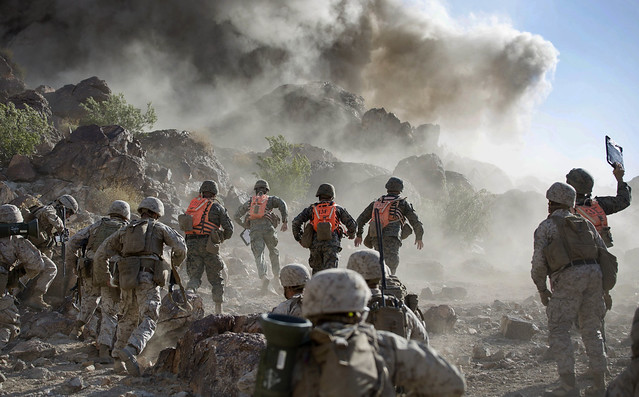
The executive director of the Scientists for Global Responsibility says that, “Those that do, frequently provide incomplete statistics. As a result, military aircraft statistics might be buried under ‘aviation’, military tech industry figures could be hidden under ‘industry’, military bases could be hidden under ‘public structures’, and so on.” Indeed, not just the general population is misinformed; policymakers and even scholars are unaware.”
The “War on Terror” itself has released 1.2 billion metric tons of greenhouse gases into the atmosphere, according to the Watson Institute at Brown University. This has more of a warming effect on the planet than the annual emissions of 257 million cars.
The impact of war on the environment is significantly more immediate than that of greenhouse gases warming the climate. People trapped in conflict zones, who must struggle with dangerous air, water, and soil, are acutely aware of pollution. People in Afghanistan have been subjected to open-air burn pits used by the army to dispose of rubbish, in addition to the continual pollution created by bombs. The ensuing gases from these trenches have caused cancer rates to rise among both soldiers and residents.
The Current Russian Invasion of Ukraine resulted in a massive loss of life, widespread displacement, and a worldwide food crisis that is only getting worse. The violence has also wreaked havoc on Ukraine's natural ecosystem, demonstrating the various ways that war destroys biodiversity and contributes to the climate problem. Hundreds of environmental crimes have been documented by advocates and activists in Ukraine, which they claim deserve a charge of ecocide by international tribunals. Attacks against industrial sites that poison groundwater supplies and airways, as well as deliberate bombings of wildlife refuges and other key ecosystems, are examples of these crimes. With each passing day of fighting, Ukraine's ability to reclaim its vibrant society and environment deteriorates, as does its ability to move to a non-fossil-fuel economy.In recent years, there has been a developing narrative that the climate problem represents a national security concern that necessitates military spending. While a deteriorating environment does pose a threat to humanity, according to the Conflict and Environment Observatory (CEOBS), few things feed the issue more than conflict, which keeps the global fossil fuel sector afloat by locking in demand for oil, gas, and coal. War invariably results in devastation, resulting in widespread poisonous chemicals, dead fauna, and a choking environment.
According to the United Nations, war-induced power vacuums may lead to illicit rivalry for natural resources, with examples including illegal logging, the purposeful lighting of forest fires to clear land, and the mining of rare minerals using extremely harmful methods.
Rebel groups in Colombia have engaged in illicit mining, polluting sources of water with mercury.
During the Vietnam War, the US army used a "scorched-earth" approach to chemical warfare, destroying landscapes with poisons such as "Agent Orange," which continues to have an influence on people today.
Urban warfare, such as what is now taking place in Ukraine, causes considerable damage to buildings, roads, and infrastructure, which can fill the air with debris and rubble, making breathing difficult. The Russian invasion of Ukraine has included strikes on facilities that handle toxic chemicals like ammonia, putting the safety of adjacent towns in jeopardy.
Saudi Arabia has bombed infrastructure in Yemen, including desalination facilities, dams, and reservoirs, denying residents simple access to water.
Then we have deforestation as the major cause for fast pacing climate change. This is caused by numerous factors. Although some of them are unintentional and uncontrollable, there are activities which are intentional and can be prohibited to an extend. Some of the causes of deforestation are cattle ranching, industrial livestock farming, mineral extraction, illegal cutting of trees from reserved and unreserved forests, oil drilling etc. In India, we have several case laws which seriously talks about deforestation, mining from forests etc.
The land, water and air are constantly getting contaminated and polluted by various factors. It shall be noted that most of these unwanted phenomena are due to human interactions. Human beings for their monetary benefits and luxury take the soul of nature out and sell it in the market. This not only affects other fellow human beings who wants to protect environment or who do not destroy the nature but also the other living creatures and the balance of the ecosystem.
IS ECOCIDE A CRIME?
The definition of crime is perplexing. It can be simply defined as an act or omission which is punishable by law. Before considering an act as a crime or an offence, there must a reason behind it. Most of cases acts which are detrimental to the society or public at large are considered are acts punishable by law. There are several reasons to consider ecocide as a crime. The first and foremost would be the wars we have fought. The World Wars, several civil wars other inter terriorial wars etc. have caused huge havoc in the world. The next in line would be industrialization and the associated environmental exploitation. Although the second one can be controlled by domestic laws, the first one is definitely not controllable by any domestic laws, unless we have a hyperpower in the world.
There are several instances in the world which caused humungous and permanent environmental destruction.
Some of those are stated below:
Vietnam War: During the Vietnam War, the US military sprayed millions of gallons of herbicides and defoliants across wide swaths of southern Vietnam for more than a decade, from 1961 to 1971.

Congolese Civil Wars: Since the mid-1990s, a succession of deadly armed wars in the Democratic Republic of Congo have wreaked havoc on animal populations, which have served as a source of bushmeat for fighters, desperate civilians, and commercial traffickers. As a result, small animals like antelopes, monkeys, and rodents, as well as larger animals like apes and forest elephants, have taken the brunt of the conflict. While there are a variety of core causes for these conflicts—historical, ethnic, and political—fighting over ownership, access to, and use of natural resources, as well as the profits connected with them, has been a major driver of violence. Conflicts have empowered syndicates to carry out deforestation and promote damaging mining operations as a result of the anarchy that has resulted from them.
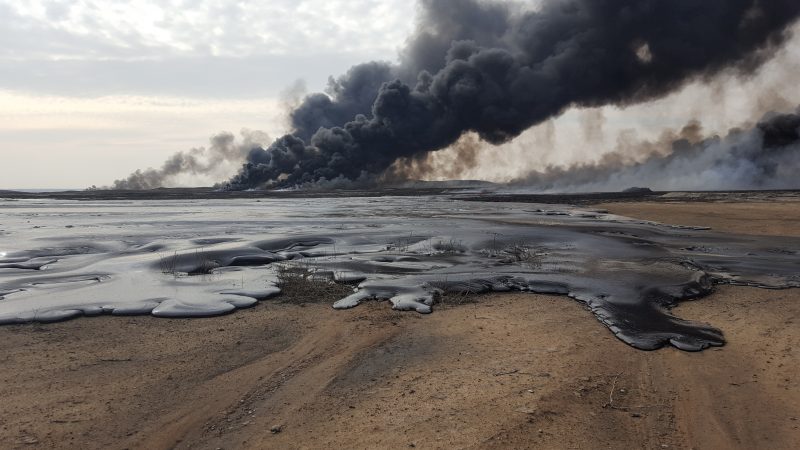 Iraq marshes and Burning oil wells: In response to a Shia revolt in southern Iraq, Saddam Hussein's soldiers drained the Mesopotamian marshes, the Middle East's biggest wetland environment, located at the confluence of the Tigris and Euphrates rivers. The marshes were reduced to less than 10% of their former size, and the environment was turned into a desert with salt crusts as a result of a series of dikes and canals. In 2017, Islamic State terrorists set fire to oil wells in Mosul, Iraq's southern metropolis, spilling a hazardous combination of chemicals into the air, water, and land.
Afghanistan wars and battles: More than half of the country's woods have been devastated due to decades of fighting. In certain places of Afghanistan, up to 95% of the land has been deforested, owing in part to people's coping mechanisms and the breakdown of environmental control over decades of conflict. For millions of Afghans, significant deforestation has had a variety of social, environmental, and economic consequences, including increased vulnerability to natural catastrophes like as floods, avalanches, and landslides.
Nepalese Civil War: During the armed war that lasted from 1996 to 2006, the army, which had previously been responsible for forest preservation, was called upon to conduct counter-insurgency operations. Insurgents and civilians alike exploited animal and plant resources such as medicinal plants like Yarsagumba (Cordyceps sinensis) and Chiraito (Swertia Chiraita), among others, in regions like the Khaptad National Park in the Makalu Barun Conservation area.
Columbian Conflict: In regions controlled by the Revolutionary Armed Forces of Colombia (FARC), decades of uncontrolled gold mining have taken their toll on the ecosystem. Mining, along with the unlawful harvest of other natural resources like timber, was a key source of revenue for the rebels. It led to mercury poisoning of rivers and land, particularly in the Quito river basin.
According to the WWF's current Living Planet Report, the population number of mammals, birds, fish, amphibians, and reptiles has decreased by 68 percent globally, and by as much as 94 percent in Latin America.
In the long run, we can see children being born with several irreversible genetic mutations, cancer, etc. We can see that from the use of Agent Orange to the use of Endosulfan in Kerala (although it got banned in 2005, the effects are continuing).
The above stated instances are countable and few in number, but it is a fact that uncountable times we are witnessing ecocide and its effects on living beings. Hence, definitely it can be considered as an offence which shall be punishable by law.
CAN ECOCIDE BE CONSIDERED AS AN INTERNATIONAL CRIME?
Currently, we consider Crimes against Humanity, Genocide, War Crimes, and the Crime of Aggression as four major international crimes. There are discussions and debates going on around the world on the question that whether Ecocide will be considered as the fifth international crime.
International organisations are weighing in with expert publications such as the International Energy Agency’s “Net Zero by 2050”. The Report serving as a reminder that the clock is ticking towards the targets set by the Paris Agreement and the IPCC’s “Special Report on Global Warming of 1.5°C”.
International crimes are those offences which affect citizens in an inter-territorial or cross-border manner. It cannot be solely justified to incorporate into the domestic affairs of one country.
The reason why it should be considered an international crime is that it affects human beings severely, even though we neglect other living creatures. It can be induced by another nation or a private entity of another nation. It affects innocent citizens and not just the army base or naval base.
As we can already see many international communities, NGOs, even Prime Ministers and Presidents of various nations, young adults and even teenagers are pushing to consider it an international crime. It is highly unsafe for the future generation to tolerate such changes in Nature without any kind of international approval or acceptance of it.
Due to the high use of toxic chemical substances across the globe, especially in the case of wars and interventions, we can see both ecological and human deformities. One such heart-melting episode is still going on in Iraq as part of their toxic battle legacy. Fallujah Babies is one such highly noticeable recurring incident in the world which happened due to the US and UK’s use of depleted uranium in Iraq.
RESPONSE OF INTERNATIONAL COMMUNITY
The United Nations Organization is the major international organization where we can see most the countries have taken their membership. Hence, the declarations and documents they release are of utmost importance in any international affair. Since the environment cannot be territorialized like the boundaries of a nation, the actions of one nation can readily affect others or even the entire globe. This was a great concern among many small and big nations.
The United Nations National Assembly endorsed an objective titled Towards a Global Pact for the Environment in 2018, with the goal of laying the groundwork for an International Environment Act. The United Nations Environment Program released the first worldwide evaluation of the condition of environmental legislation in 2019, but it was not favourable. Many of the environmental accords negotiated over the last 50 years have failed, according to one of the report's statistics. This UN failure clearly demonstrates that we must take environmental issues seriously and clearly identify reasons for prosecuting persons, because this sector is becoming increasingly complicated, and we urgently need to build international and national law that lowers violations.
Stop Ecocide Foundation is an organization which shall be treated with utmost importance. It was their International Expert Panel who was responsible to make the definition of the term ‘ecocide’.
Ecocide Alliance is another International Parliamentary Alliance which recognises Ecocide.
These are organizations who recognize Ecocide and wants to get an international recognition as a fifth crime against peace.
CONCLUSION
The position of domestic laws of some countries is clear about considering ecocide. However, the position of international criminal law is not precise in nature. There are a lot of activists and head os states who are in favour of considering ecocide as a fifth international crime.
In India, there are numerous case laws where the SC and various HCs have explained the importance of environment and how it shall be protected.
It may occur that the above examples and instances might point that ecocide occurs during aggression and war, but the fact is that there are high rates of ecological destruction during peacetime as well. Hence, the existing regulations and codes may not be enough to deal with the situation.
In conclusion, my opinion is to make ecocide the fifth international crime. So that we can stay on earth and the future generation will have a relatively good atmosphere to live in. This is also seen as a measure to prohibit the use of chemicals and toxic substances against innocent citizens and leave them behind after the war to suffer the aftermath for generations.


Comments
Post a Comment